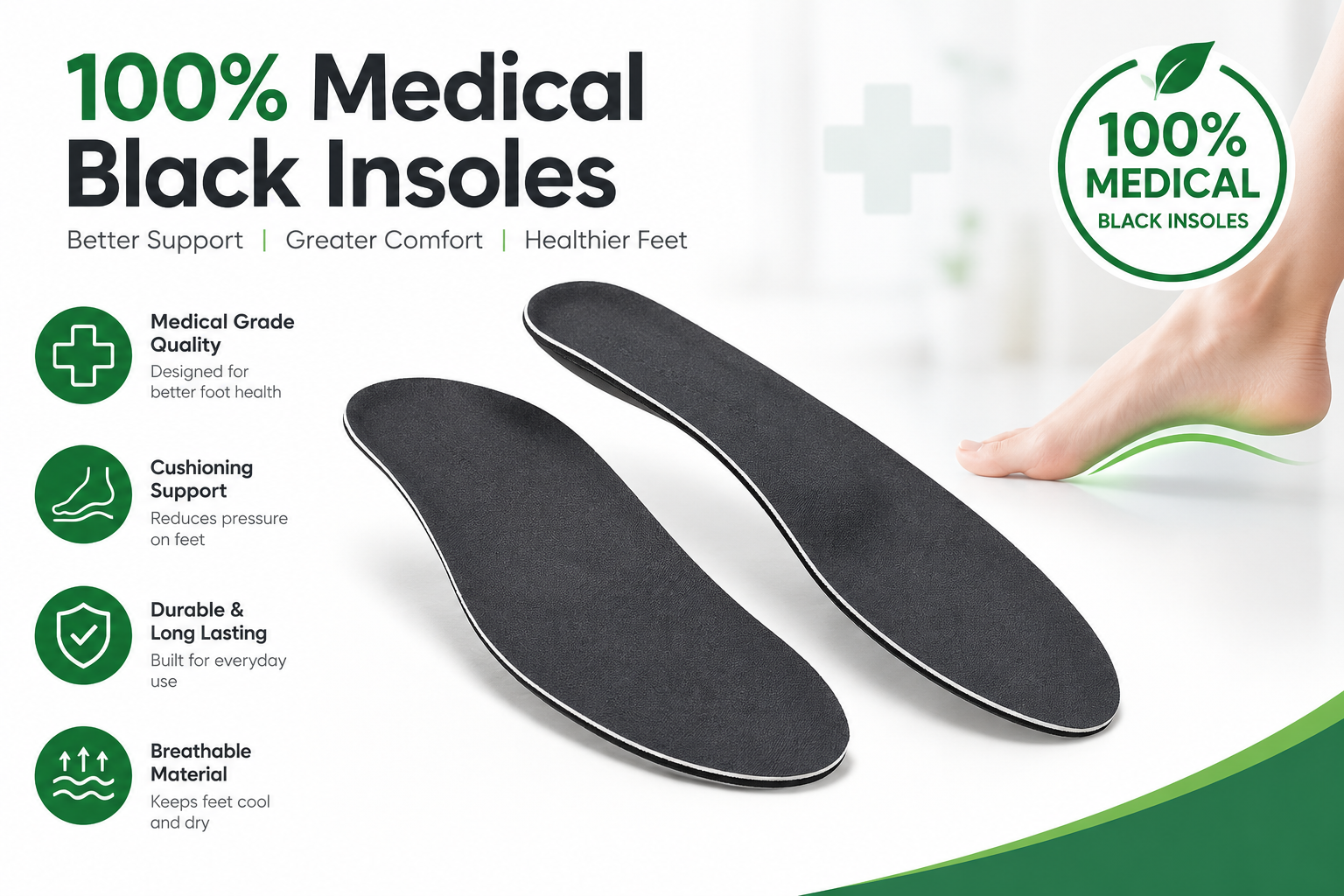
100% Medical Black Insoles: Structured Support for Daily Comfort
Across Saudi Arabia, many of us spend long hours on hard floors in offices, hospitals, schools, malls, and mosques, often in closed shoes. Over time, tired arches, sore heels, and aching knees can become part of the routine, and the cause is not always clear. Our 100% Medical Black Insoles were made for people who need firmer, more structured support than a standard insole offers. In this guide, we explain what they are, how they work, who they suit, and how to decide whether they fit your daily routine.
What Are 100% Medical Black Insoles?
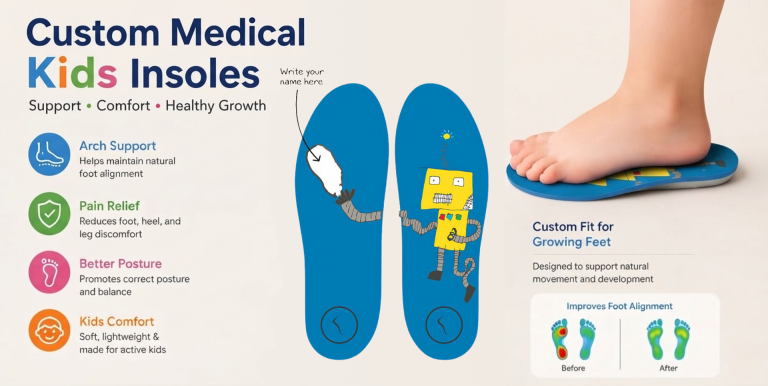
The 100% Medical Black Insoles belong to our FootBalance range, which is built around the idea that every foot is different and support should reflect that. They are a medical-grade option, designed to provide stronger arch support and better control of foot position than a basic cushioned insole.
They replace the factory insole in your shoe. The black top cover keeps a clean, neutral look inside the shoe, and the slim profile allows them to sit in most closed footwear without changing how the shoe fits or looks.
Where our Balance option is aimed at general everyday comfort, the Medical option is for people who need a more supportive base, for example, those with flatter arches, uneven wear on their shoes, or discomfort that returns after long periods of standing.
Why Structured Support Matters
Your feet absorb impact with every step and carry your full body weight. A small difference in arch height or in the way your ankle rolls can change how force travels up through your knees, hips, and lower back.
A standard flat insole offers very little structure. It cushions the foot but does not guide it. A medical-grade insole adds shape under the arch and heel so the foot is held in a steadier position while you walk or stand. This can reduce the effort your muscles and joints make to keep you balanced.
We design this range to work with the natural movement of the foot rather than against it. The aim is steady support, not forcing the foot into an unnatural shape.
How the Insoles Work During Movement
When you walk, your heel strikes the ground, the arch flexes as your weight moves forward, and your toes push off. If any stage is uneven, other parts of the body compensate.
The Medical Black Insoles support that sequence in three ways:
- The heel area helps keep your foot steady at the moment of landing.
- The arch area gives structure so the foot does not collapse inward more than it should.
- The forefoot area supports a smoother push-off through the toes.
Together, these features help spread pressure more evenly across the sole. Many people notice the difference most at the end of a long day or after standing for extended periods.
Who May Benefit From Medical Grade Insoles
These insoles can be a sensible choice for adults who want stronger support in daily shoes. You may find them useful if you:
- Stand or walk for most of your working day
- Have flat or low arches that feel unsupported
- Feel tired or sore in your heels and arches by the evening
- Notice your shoes wearing down unevenly
- Feel occasional knee or lower back tiredness after being on your feet
- Have been advised by a professional to use supportive inserts
They are intended for adult wear in everyday footwear. If you are choosing for a child, please speak with a specialist first.
Common Foot Concerns Where Support Is Considered
People often come to us unsure whether their discomfort starts in their feet. Heel discomfort in the morning is one of the most common concerns, and our guide on plantar fasciitis explains how the condition develops and how supportive footwear can sit inside a wider care plan.
Other concerns where better support is commonly considered include:
- Arch fatigue after long periods of standing
- Pressure under the ball of the foot on hard floors
- Instability when walking, especially in flat shoes
- Strain in the knees or lower back linked to foot position
Insoles are one part of foot care. They work best alongside suitable shoes, stretching, and rest when needed.
How to Choose Your Insoles: A Simple Checklist
Choosing an insole should feel clear and unhurried. We suggest this process:
- Think about how you spend most of your day. Standing, walking, driving, and desk work all place different demands on your feet.
- Note where you feel discomfort, such as the heel, arch, ball of the foot, or knees.
- Look at the soles of your current shoes. Uneven wear can show how your foot moves.
- Check the shoes you plan to use. They should have a removable insole and enough depth.
- Measure your shoe size carefully and choose the matching size on the product page.
- Start with your most used pair of shoes, then add others once you feel comfortable.
Taking a few minutes with this checklist helps you choose based on your routine rather than guesswork.
Many of the people we speak with mention that their shoes wear down on one side or that their ankles tend to roll inward. This is often described as overpronation, and it is one of the situations where a structured insole is usually considered. A quick check of your old shoes can tell you a lot about how you move.
Fitting Them Into Your Shoes
Most closed shoes can hold these insoles, including sneakers, work shoes, loafers, and casual lace-ups. For the best result:
- Remove the original insole from the shoe.
- Place the original beside the new insole to compare the outline.
- Trim the new insole carefully if needed, following the shape of the old one.
- Insert it so it sits flat against the base of the shoe, with the heel at the back.
- Put the shoe on and check that your heel does not slip and your toes can move freely.
Shoes that are very tight or very shallow may not leave enough room for added support. In that case, a shoe with a deeper heel and a roomier toe box is a better match.
Getting Used to Your New Insoles
A more supportive base can feel different at first, because your feet and muscles are used to a particular position. This is normal and usually settles within a short time. A gradual approach works well:
- Wear the insoles for one or two hours on the first day
- Add an hour or two each day through the first week
- Use them in your most common shoes first
- Notice how your feet feel at the end of each day
Mild awareness under the arch in the first few days is common. If you feel sharp or lasting pain, remove the insoles and speak with a healthcare professional.
Everyday Use in a Warm Climate
Warm weather can make feet sweat more, which affects both comfort and hygiene. A few habits help in Saudi Arabia, where long hours in closed shoes are common:
- Wear breathable socks that manage moisture
- Remove the insoles from your shoes at night so both can dry
- Keep a second pair of shoes so each pair can rest between days
- Avoid leaving shoes inside a hot car, as heat can affect materials over time
These small steps help the insoles stay fresh and supportive for longer.
Caring for Your Insoles
Simple care keeps the insoles in good condition:
- Wipe the surface with a damp cloth and mild soap
- Let them dry naturally, away from direct sun or heaters
- Avoid machine washing or soaking
- Check them every few months for flattening or wear on the top cover
If the support feels flat or the cover looks worn, it may be time to review your fit and consider a replacement.
When to Speak With a Professional
Insoles support comfort and alignment, but they are not a treatment for medical conditions. Please speak with a doctor or podiatrist if you have:
- Pain that lasts or keeps returning
- Swelling, redness, or numbness in the feet
- A diagnosed condition such as diabetes or arthritis
- Pain that began after an injury
A professional can advise whether an insole suits your situation and how it should be used alongside other care.
Talk to Us About Your Fit
At LifeBalance Foot Care, we believe good foot health starts with understanding your own feet. We keep our guidance practical and our options clear, so you can decide with confidence. If you have questions about sizing, footwear, or whether the Medical option suits your routine, our team is happy to talk it through with you.
Frequently Asked Questions
1. What are 100% Medical Black Insoles used for?
They provide structured arch and heel support inside everyday shoes. They suit adults who want steadier alignment and more comfort during long periods of standing or walking.
2. What is the difference between the Medical and Balance insoles?
The Balance option is designed for general everyday comfort. The Medical option offers firmer, more structured support for people who need greater control of foot position or who feel discomfort that returns after long days.
3. Can I use these insoles in all types of shoes?
They fit most closed shoes with removable insoles, such as sneakers, work shoes, and casual footwear. Very tight or shallow shoes may not have enough space, so check the depth and fit first.
4. How long does it take to get used to them?
Most people adjust within one to two weeks. We suggest starting with a few hours of wear and increasing the time gradually while you notice how your feet respond.
5. Can insoles replace medical treatment for foot pain?
No. Insoles support comfort and alignment, but they do not replace medical care. If you have persistent pain, swelling or a diagnosed condition, please consult a doctor or podiatrist.