Custom Medical Kids Insoles in Saudi Arabia for Growing Feet
A child’s feet go through more structural change in their first decade than at any other point in life, which makes proper support during those years more important than many parents realize. At LifeBalance Foot Care, we work with families across Saudi Arabia who want to address foot alignment or comfort concerns early, before small issues have the chance to affect how a child walks, runs, or stands as they grow older. Custom medical kids’ insoles are one of the most effective tools for supporting healthy foot development during these formative years.
This guide explains why growing feet often need more than a standard shoe insert, what signs suggest your child may benefit from a custom-fitted insole, and how the process works from assessment to a finished pair built specifically for your child.
Why Children’s Feet Need Different Support Than Adult Feet
An adult foot has already finished developing, which means insoles for adults are primarily focused on managing existing conditions or improving comfort. A child’s foot is still forming, with growth plates, arches, and muscle structure all continuing to change through childhood. This means the goals of a pediatric insole are different. Rather than only addressing a current complaint, a well-designed kids’ insole supports the foot through its natural development, helping guide healthy alignment while the structure is still adaptable.
This is also why generic children’s shoe inserts sold in general retail settings often fall short. They are built to a general size range rather than accounting for how a specific child’s foot is developing, which limits how much genuine support they can actually provide.
Common Signs a Child May Need Additional Foot Support
Parents are often the first to notice something is off, even if they are not sure exactly what it is. A few signs that may indicate a child would benefit from a proper foot assessment include the following.
- Frequent complaints of foot, leg, or knee discomfort after normal activity
- Visible flat feet or feet that roll noticeably inward while standing or walking
- Toe walking that continues past the age where it is typically expected to resolve on its own
- Uneven or unusual wear patterns on the soles of regularly worn shoes
- Reluctance to participate in physical activities that were previously enjoyed without issue
None of these signs alone confirm a specific condition, but together they are worth discussing with a foot care professional rather than assuming a child will simply grow out of the issue without any support along the way.
It is also worth noting that discomfort is not always the first indicator parents notice. Some children compensate for foot alignment issues by changing how they sit, stand, or move without ever complaining about pain directly. A child who avoids running games at school or tires more quickly than their peers during physical activity may be dealing with an underlying foot mechanics issue rather than simply having lower stamina.
Understanding Pediatric Overpronation
One of the more common issues we see in children’s foot assessments across Riyadh and other cities in Saudi Arabia is overpronation, where the foot rolls inward excessively during walking or running. Some degree of pronation is normal and even necessary for shock absorption, but excessive rolling can place uneven strain on the ankles, knees, and hips over time if left unaddressed during the years when the foot structure is still forming.
If you have noticed your child’s shoes wearing unevenly or their feet appearing to collapse inward while standing, it may be worth reviewing our resource on overpronation to understand how this pattern develops and why early support matters more in children than it might in adults who have already finished growing.
Heel discomfort is another concern that shows up during active childhood years, particularly among children involved in regular sports or running activity. While heel pain in children often stems from different causes than it does in adults, the underlying principle of providing proper support during high-impact activity remains the same. Addressing this early tends to be far simpler than managing a more entrenched pattern of compensation later on.
How the Custom Fitting Process Works for Kids
Fitting a child for custom insoles follows a similar foundation to an adult fitting, though the process is adapted to be quick and comfortable for younger patients. It typically includes the following steps.
- A conversation about any specific concerns, activity level, and footwear the child wears most often
- A visual and physical assessment of foot structure, arch development, and walking pattern
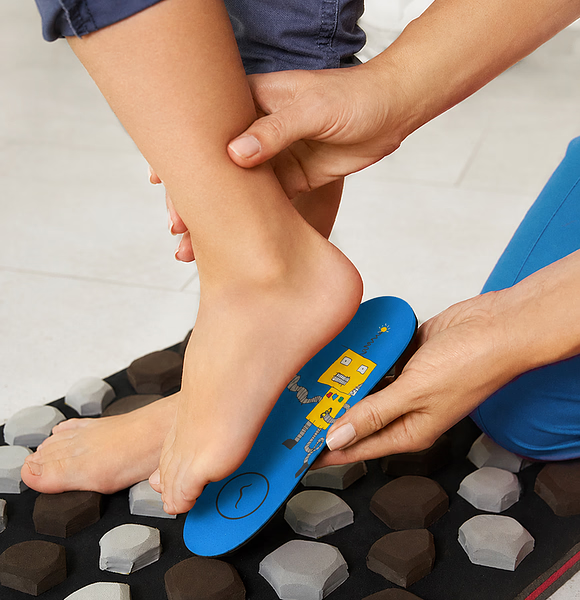
- Measurement and molding to capture the child’s current foot shape accurately
- Material selection appropriate for a child’s activity level and growth stage
- A fitting check to confirm comfort, since a child is far more likely than an adult to simply stop wearing an insole that feels wrong
Because children’s feet continue to grow, follow-up assessments are typically recommended more frequently than they would be for an adult, to make sure the insole still matches the child’s current foot size and development stage.
Footbalance 100% Kids and What Sets It Apart
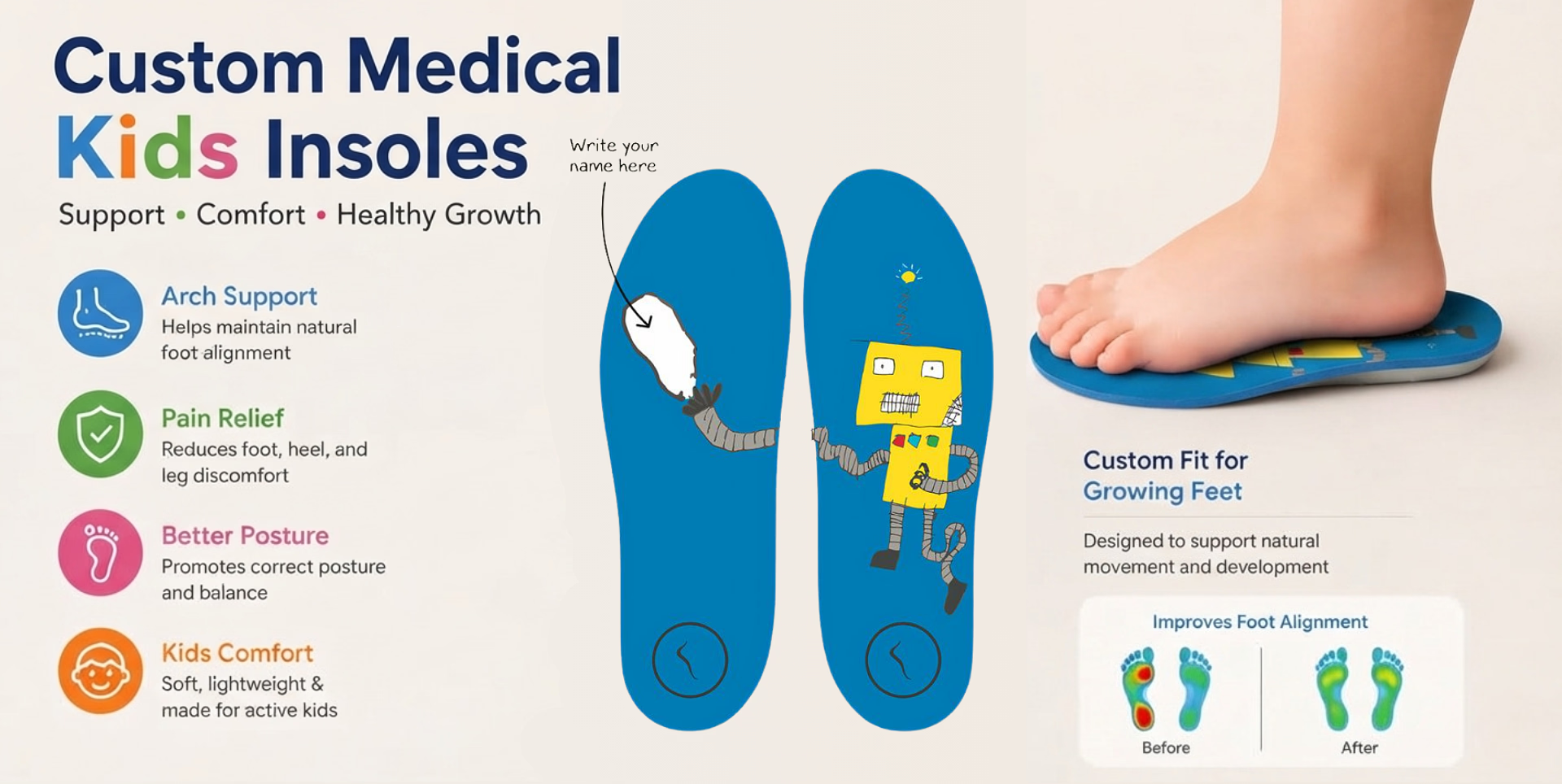
Among the options available for pediatric foot support, Footbalance 100% Kids is designed specifically around the needs of a developing foot rather than being a scaled-down version of an adult product. It is built to provide structured support during the years when guiding healthy alignment has the most long-term impact, while still remaining comfortable enough for daily wear during school, play, and sports activity.
Parents considering this option can review our medical kids’ insoles product details directly, which outline specifications and what makes this option suited to growing feet specifically.
What Happens if Foot Concerns Are Left Unaddressed
It can be tempting to assume a child will simply grow out of an issue like flat feet or occasional foot discomfort, and in some cases that is true. However, structural patterns that continue unaddressed through the school-age years can carry forward into adolescence and adulthood, sometimes contributing to knee or lower back discomfort later in life that traces back to uncorrected foot mechanics from childhood.
This does not mean every child needs intervention, but it does mean that ongoing signs of discomfort or visible structural concerns are worth a proper assessment rather than assuming the issue will resolve entirely on its own.
Getting Your Child Properly Fitted in Saudi Arabia
A pediatric insole is only as effective as the fitting process behind it, which is why an in-person assessment matters more for children than it does for many adult fittings. Our team can evaluate your child’s specific foot structure, walking pattern, and activity level to determine whether a custom insole is appropriate and which option would provide the most benefit as they continue to grow. Families exploring options beyond a single pair can also browse our broader range of insoles to see how pediatric support compares with other insole types we carry for different ages and needs.
Getting Started
If you have noticed signs of discomfort, uneven wear, or visible alignment concerns in your child’s feet, addressing it during these growth years is generally more effective than waiting. Find your nearest LifeBalance location to schedule a proper foot assessment for your child and explore whether custom kids insoles are the right fit for their needs.
Frequently Asked Questions
1. At what age can a child be fitted for custom insoles?
Children as young as four or five can often be assessed and fitted, though the appropriate age depends on the specific concern and the child’s activity level. A proper assessment will confirm whether fitting is appropriate at your child’s current stage.
2. How often do kids need new insoles as they grow?
Most children need reassessment and a new fitting every six to twelve months, since foot size and shape can change quickly during active growth periods.
3. Is toe walking always something to be concerned about?
Not always. Many young children toe walk as part of normal development and outgrow it naturally. If it continues past the typical age range or is accompanied by other signs of discomfort, a professional assessment is worth considering.
4. Can custom kids insoles be used in regular school shoes?
In most cases, yes, though this depends on the specific shoe and insole design. During the fitting process, our team can confirm compatibility with the footwear your child wears most regularly.
5. Will my child need to wear the insoles all the time?
This depends on the specific concern being addressed. Some children benefit from consistent daily use, while others only need support during specific activities such as sports. Your fitting assessment will guide the right approach for your child.